
By Maël Lucas – Laboratoire des droits culturels
September 2026
Introduction
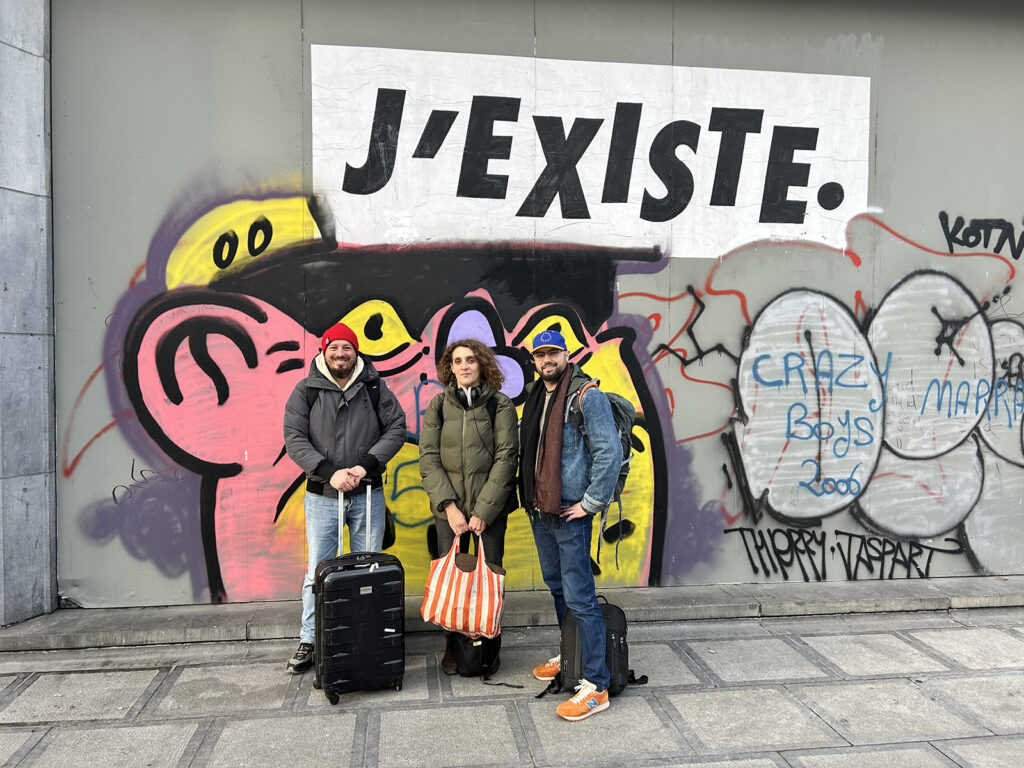
The genesis of alternARTives lies in an act of connection. La Bellone, a Brussels artist-residency venue and partner of La Fabrique Francophone, identified the closeness of commitment between the latter and La Vénerie, both engaged in the field of culture and citizen participation. From this initial connection grew a series of preparatory exchanges, which gradually revealed themselves to rest not merely on a complementarity of activities, but on a convergence of values substantial enough to sustain a framework of transnational cooperation. The Erasmus+ project that emerged from it, though already carrying coherent promises of discovery, development and significant benefits for the people involved, nonetheless found the essence of its value in the relationships forged along the way.
Designing the activities, and then writing the Erasmus+ application, thus called for constant adjustment between two registers that do not articulate spontaneously: on one side the language of European project management and evaluation — deliverables, indicators, activity schedules — and on the other an approach to cultural rights that questions the very assumptions of this way of organising collective action (this tension may be related to Boltanski and Chiapello’s analysis of the “projective city” as the dominant grammar of contemporary action, in The New Spirit of Capitalism, 1999). Writing the project therefore consisted, in part, in negotiating a place for what by its nature escapes the logic of the deliverable.
This report explores elements arising from putting the planned activities to work. It should be stated at the outset, however, that the quality of these actions — and the interpretation that can be drawn from them — was very strongly shaped by the nature of the relationship forged between the project leads. alternARTives was first and foremost the occasion for an encounter between people discovering one another, and discovering the shared values that bind them beyond their respective mandates. This relational dimension, though it takes root in the most informal register of human contact, must find its place in this research: it carries lessons that can be formalised, even if their reproducibility remains uncertain.
The Laboratoire des Droits Culturels situates its research within a questioning of the imperative of action in the hierarchy through which public policy is valued; the “relational research” methodology seeks to inscribe itself in that questioning, in relation — among other things — to the terminology of “action research”.
It should also be noted that the present relational research concerns above all La Vénerie’s Centre d’Expression et de Créativité (Centre for Expression and Creativity), rather than its “cultural centre” component. This focus stems mainly from the time actually spent alongside Fabrice Vandersmissen, who in practice took on the leadership of the project on the Belgian side — without this diminishing the contribution of other members of the team and of the management.
This project was led principally by three people: Fabrice Vandersmissen, artist-facilitator and head of La Vénerie’s Centre d’Expression et de Créativité; Cédric Brossard, project coordinator for La Fabrique Francophone; and Maël Lucas, on behalf of the Laboratoire des Droits Culturels, author of this report. Around them, several people accompanied and enriched the project to varying degrees: Claire Poinas, director of La Vénerie, whose involvement took on particular significance when she took up her post; Manu Varol, on the La Fabrique Francophone side; and, on the Centre d’Expression et de Créativité side, Elise Nguyen (visual artist), Pascal Crochet (actor and stage director) and Rémi Pons (writer, director and maker of the project’s podcast). Elsa Vandecnocke, cinema programmer and cultural mediator at the Cultural Centre, and Pauline Coppée, board member of La Fabrique, also took part in the project’s activities. Other people, mentioned throughout the report, contributed more occasionally to these encounters.
1. The Centre d’Expression et de Créativité: a resource for cultural rights
Defining dignity
A first, essential observation: in light of the analysis produced by the Laboratoire des Droits Culturels, La Vénerie’s Centre d’Expression et de Créativité constitutes an exemplary space — given its context and the usual realities of this type of structure in the cultural and so-called socio-cultural field — with respect to the cultural-rights framework. This exemplarity lies in the fact that the relational ethics upheld by the Laboratoire as its primary reading of cultural rights finds, at the CEC, practices, intuitions and resources that correlate strongly with the markers of General Comment No. 21 of the United Nations Committee on Economic, Social and Cultural Rights (availability, accessibility, adaptability, appropriateness, acceptability). Open questions naturally remain, in order to deepen a consideration of people grounded in human rights; the factors limiting their exploration, however, appear to stem for the most part from constraints external to the CEC and its team, rather than from choices of its own.
This quality rests first of all on one person, Fabrice Vandersmissen, whose rootedness in the life of the neighbourhood and whose relationships with the people concerned by the CEC’s activity are widely acknowledged, and closely tied to his personal investment. These qualities are shared by the CEC’s small team of practitioners and support workers, volunteers and employees alike: a long-standing rootedness, a fine-grained knowledge of the people, constant attention to neighbourhood partners, and a commitment to a conception of the CEC’s work that strongly incorporates the informal dimension of contact. This informality produces an effect of continuity close to that of an extended family, where the boundary between participants, facilitators and volunteers blurs. Each person’s passage leaves a tangible trace — created objects kept, letters written, words left on the bar — testifying to a space where people “exist” and resist any form of reification: each person’s path seems known, shared, protected. Exchanges there are “open”: beyond commonly shared values, the space as a whole carries a dimension of hospitality, in which every opinion and every trajectory can find a welcome.
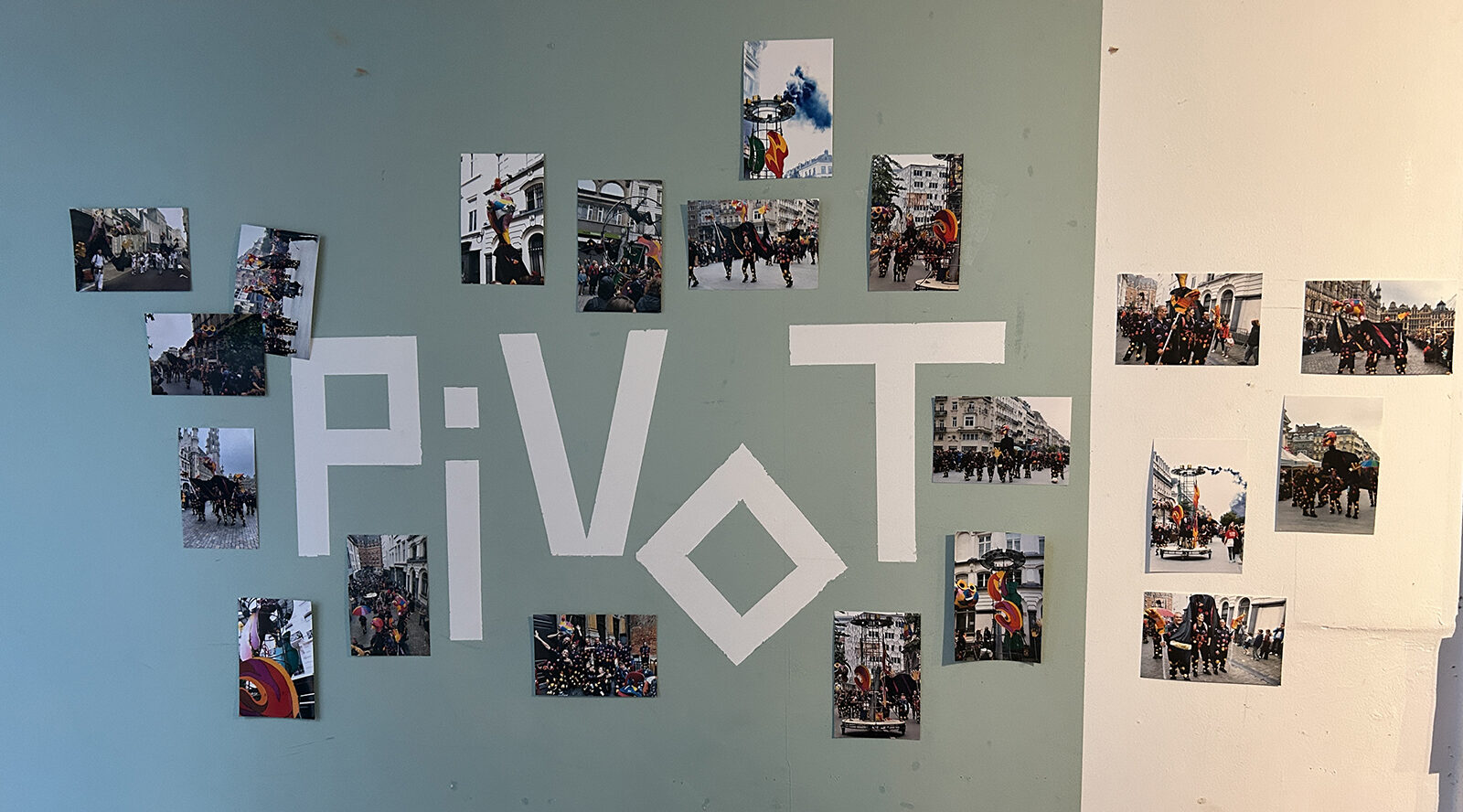
These forms of unconditionality are found again in the testimonies gathered from another team, that of the non-profit Le Pivot, met during the first activity, with an equally strong community dimension, and in the direct testimonies of people supported (and supporting) in situations of hardship. This is far more than a space for contribution: it is a space that is “holistic” towards the person, taking on both a function of welcome and of connection to other people and resources, and a function of recognising their trajectory in its positive dimension — a search for their capabilities, in Amartya Sen’s sense, capable of moving them out of the position of beneficiary as quickly as possible (this dimension of recognising the person’s trajectory could usefully be brought into dialogue with Axel Honneth’s theory of recognition, The Struggle for Recognition, 1992, whose framework — love, rights, solidarity — maps quite directly onto what these structures put into practice empirically). To this is added a dimension of solidarity and expression liable to open onto fields unforeseen at the outset — a citizens’ newspaper, for instance, may arise from forms of involvement that nothing had suggested. These two dimensions are found again in the project led by Christian Falone within the AMO Samarcande (youth support service), where the podcasts and radio creations of Samarc’Ondes give direct and dignified reach to the voices of people in situations of hardship or addiction, without that voice being filtered, actively or passively, by the objectives of a programme initiated by an actor foreign to them.
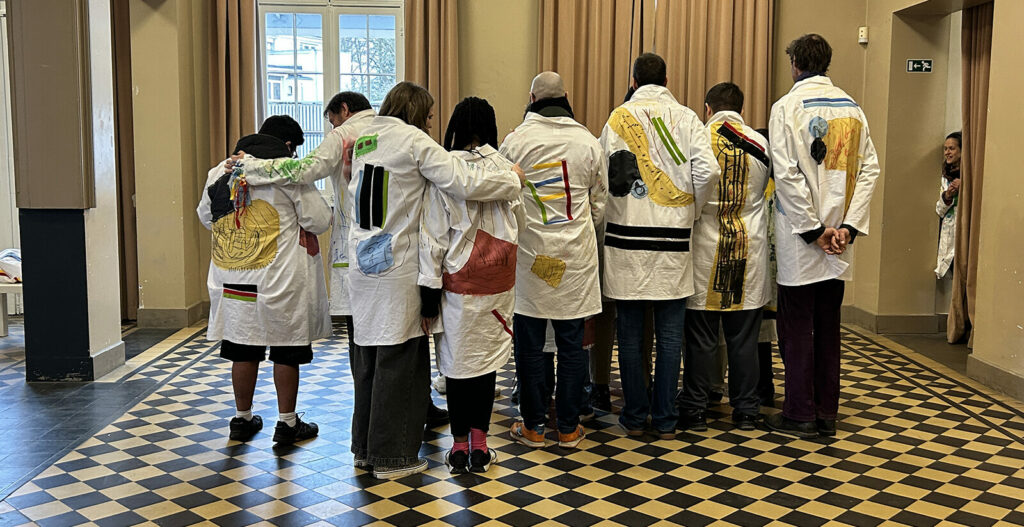
The same forms of attentiveness can be observed, finally, in the “Au nom du chœur” workshops, which bring together teenagers and young adults with intellectual disabilities, where the logic of “being together” prevails: those providing support take part in the same activities as those they support, without condescension, and appear aware of the lessons the latter bring to the way the rest of society looks at itself. A central dimension of this approach lies in recognising people’s capacity for expression. This recognition does not depend on that expression conforming to the formats expected in the workshops. It lies rather in the attention that professionals develop to interpreting the diversity of signals a person sends within the relationship — and this, prior to any question of their participation in the structure’s collective activities.
Brief moments made it possible to reveal these potential translations of the ethics of cultural rights. It is understood that this potential remains subject, day to day, to working environments and outside readings, to calls for projects and to economies less centred on these qualities than on the objectifiable, quantifiable result of these actions which are, in fact, relationships. This report is part of an effort to make these moments visible, and to articulate what they ought to teach structures — as well as funders and evaluators — about their viability and their importance for the common good.
Structures and relationships
This relational quality raises, by implication, the question of the relationship between the interpersonal bond and the institution that hosts it. To welcome a narrative without instrumentalising it presupposes a truth that plays out at the scale of the relationship itself; yet the institution carries within it, as soon as its object exceeds the relationship alone, a structural tendency to instrumentalise what it takes in (a tension that Michel de Certeau analyses, from another angle, as that of institutional “strategies” against the “tactics” of everyday life — The Practice of Everyday Life, 1980; it can also be read in light of Ivan Illich’s work on the effects proper to institutions, independent of the intentions of those who keep them alive).
This tension runs more broadly through Cultural Centres and CECs, and through cultural institutions in general, owing to a confusion they often maintain themselves between culture and art. In Belgium as in France, the cultural policies carried by the relevant ministries define culture in a way largely centred on the artistic field, and more particularly on its professional dimension (a reading close to that developed by Bourdieu and Passeron on cultural legitimacy as a matter of social position). This confusion partly structures the field occupied by the CECs. Cultural Centres, for their part, fall within a more classical approach of cultural democratisation, based on a supply-side policy resting largely on a professional artistic selection intended for inhabitants. The CECs — inherited from the éducation permanente (lifelong community education) movement and established in Belgium by the decree of 30 April 2009 on the framing and funding of Centres for Expression and Creativity, itself the outcome of an older history of amateur socio-cultural practices dating back to the 1970s — sit rather within the so-called socio-cultural field, synonymous with a culture conceived for “distant” audiences — not to say a second-rate culture — in which the stakes of appreciation and expression would be reduced to a form of occupation or of minimal integration of the least advantaged categories, rather than recognised as a full exercise of cultural life and its rights.
These historical realities strongly permeate, in Cultural Centres as in CECs, the professions of programming and facilitation — and, in certain respects, part of the field of popular education itself, whose very name carries this ambivalence: is it a matter of educating the people, or of enabling the people to recognise and share their own diversity and legitimacy of knowledge? This long-standing debate classically opposes an “alternative” conception of popular education (rather than a strictly top-down one) — heir to a project of resistance to institutional knowledge but reproducing its model, and which ends up reaching the middle class more than the working classes — to a bottom-up conception, oriented towards the emancipation and the capacity to act of those it concerns (see in particular Geneviève Poujol, L’éducation populaire : histoires et pouvoirs, 1981, and, for a contemporary reading, Christian Maurel, Éducation populaire et puissance d’agir, 2010). It raises directly the question of the relationship between the professional functions carried out in these structures and the ideals of reciprocity borne by both the popular-education movement and cultural rights.
For a cinema programmer as for a volunteer theatre facilitator, and despite working environments freer and more informal than in other sectors, the activity formats that naturally impose themselves in these places reproduce patterns that install a certain degree of verticality. This is partly natural — an adult before a group of children, a facilitator before a group of people with intellectual disabilities, presupposes a form of de facto authority/responsibility. But it also stems, more broadly, from an assignment that continues to be based on expertise: the cultural field is there assimilated to the artistic field, and profession, qualification or seniority play a determining role in who is granted responsibility for the group. Yet it is precisely at the CEC that one could observe the greatest number of attempts to question these reflexes: organisational realities are examined there with real vigilance, and the welcome of people, their capacity for expression and their active participation are genuinely sought.
It is therefore rather the structure itself that bounds the conclusions each project, each self-evaluation carried out by the Centre, can reach. This is observable in particular at La Vénerie’s Steering Council: debates potentially rich in lessons, were they conducted more openly, appear there on several occasions as constraints weighing on the daily mission of the committed professionals. The programmer’s role is indeed potentially put at stake with each of their choices, according to the perceived success or failure of their programming, insofar as this role — as defined by the job description, the training received and the place held within the team — remains strongly associated with a presumed artistic expertise. In the absence of training in the relational dynamics that characterise the sociology of collective action, debate on these questions then tends to be avoided: under the pressure of evaluation, all the more so in a group, projects are conceived as bound to succeed, or as meeting failures attributable to causes external to the structure (Chris Argyris calls these “organizational defensive routines”, by which organisations avoid precisely the subjects most likely to generate learning — Overcoming Organizational Defenses, 1990). The observation holds, moreover, on both sides of the relationship: despite attempts to open another space for discussion within the Steering Council, the vocabulary of success and failure continues to impose itself spontaneously in what people say.
Intergenerational issues and the challenge of transmission
The Laboratoire des Droits Culturels and La Fabrique Francophone encounter, recurrently and in very diverse contexts, one and the same tension between generations of commitment. It runs through the social and the cultural fields, but is found just as much, in France, in the worlds of ecology, the social and solidarity economy, or third places (tiers-lieux): on one side, older generations shaped by popular education and its historic struggles; on the other, younger generations whose commitment crystallises more around questions of gender, sexuality and identity — LGBTQ+ and queer in particular. This difference in fields of commitment is often accompanied by a communication deficit in both directions. Younger generations are not always aware of the history of the movements that preceded them, for want of an archiving and transmission effort that older activists have not always undertaken themselves, nor sought to connect to more recent struggles. Conversely, these same older generations may, in certain respects, have come late to the questions of feminism and sexism raised earlier by others — which fuels, on both sides, a failure of dialogue (what Karl Mannheim analysed, as early as The Problem of Generations, 1928, as the formation of distinct “generation units” within a single historical cohort, each structured by the events that politically shaped it; see also Maurice Halbwachs’s work on collective memory, The Collective Memory, 1950).
The same observation can be made in Belgium, between younger professionals — trained in cultural mediation or programming and committed to specific causes — and older professionals and volunteers more closely tied to popular education and its legacies. Opportunities to debate this openly remain fairly limited, generally speaking, in institutional as in voluntary-sector structures: younger generations often approach their profession, their commitments and their goals with firmly held convictions, and their activist horizons can, at times, give way to defensive stances in spaces of shared governance. It is also possible to observe that trajectories committed to comparable paths of emancipation, but lived under different identity conditions, sometimes lend themselves less easily to mutual identification, and that a certain universalist ambition (questioned for good and less good reasons elsewhere) may have faded as these struggles became more specific — a tension that contemporary social theory has widely documented in terms of the relationship between the recognition of identity particularities and the demand for redistribution or universality (see Nancy Fraser and Axel Honneth, Redistribution or Recognition? A Political-Philosophical Exchange, 2003).
This observation calls above all for an avenue of work: these commitments, however different in their fields and their generations, stem from one and the same aspiration to emancipation and would gain from being thought of, or lived, as complementary. Such complementarity presupposes, however, that the quality of the relationship within the teams themselves becomes a subject in its own right of the structures’ policies — no doubt a necessary condition for the memory of old struggles to nourish the new ones, and vice versa.
Behind art: invisible power relations and statuses
One last aspect still seems underestimated by some of the professionals and volunteers of cultural centres and CECs: that of the power relations that lodge themselves, often in barely visible ways, behind statuses, sectors and functions. This dimension connects directly to the question, already raised, of the structure and of the artistic sector as a whole. It can manifest quite clearly during moments of collective analysis such as the Steering Council, where speaking time is distributed incrementally according to each person’s function — an implicit regulation of turn-taking that Erving Goffman analyses as belonging to the “interaction order”, through which social positions structure, often without the participants’ own awareness, access to speech (Forms of Talk, 1981).
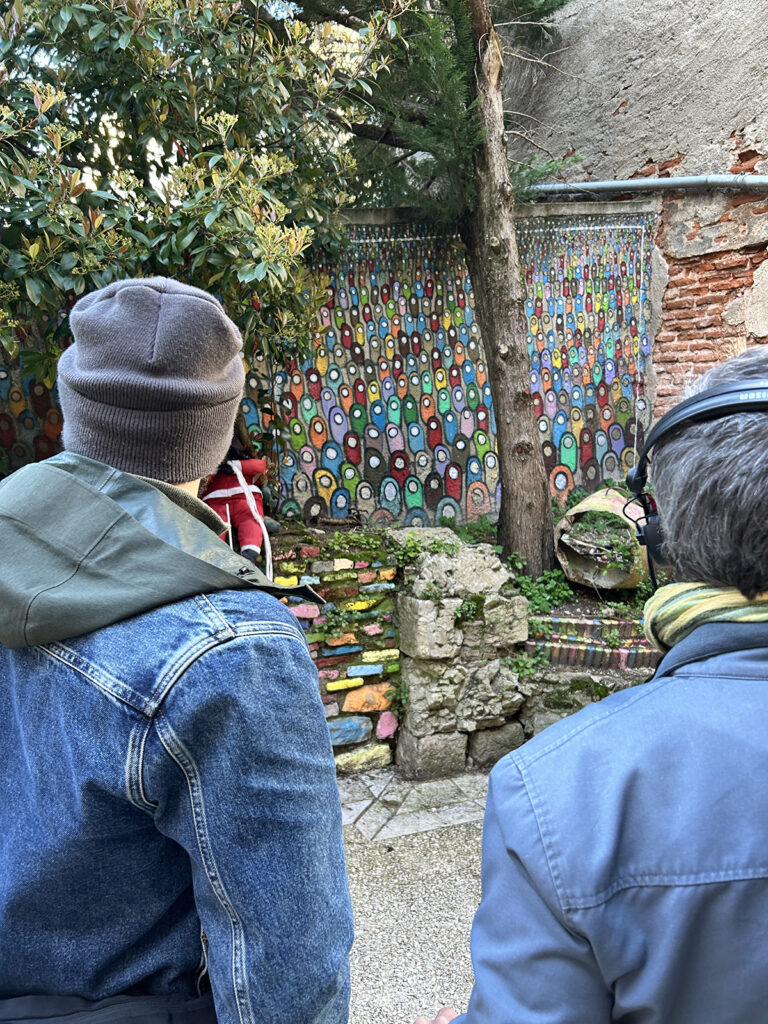
This dynamic appears less marked at the CEC, where several factors seem to counter it: the existence of a convivial space such as the bar, a certain mixing between the team and the people who frequent the place, and more lasting relationships — workshop participants know one another, meet regularly over the course of the year and thus form continuous bonds. The Cultural Centre, with some exceptions, is organised more around a more classical typology of relationships, between professionals and audiences more easily reified despite the team’s efforts, faced with an already-established programme. Its vocabulary — in its programming, its communication, its mediation activities — remains largely that of cultural democratisation. It is interesting to note that one of the management’s priorities is precisely to transform the reception areas and the bar of the Cultural Centre venue (located at a different site from the Écuries — the workshops of the Centre d’Expression et de Créativité) in order to allow greater interactivity.
The idea that a relationship to art is beneficial “in itself” is hard to question, and this mechanism is amplified for people whose development has been marked by an encounter with one or several artistic worlds. When the occasion arises, however, it becomes possible to qualify the terms: if artistic practice can indeed bring something to people, it is less by virtue of an intrinsic quality of art than of the conditions in which that practice is offered — the benevolence of the facilitation, the empowering of the people involved, the transmission of an overall symbolic relationship to aesthetics — which secure, with great caution, each person’s path towards the legitimation of their expression. This is, moreover, what the facilitators themselves claim when questioned on this point. The question of the work itself remains more debated: some facilitators remain convinced that it carries, by nature, something beneficial, while acknowledging the subjective dimension of aesthetic stakes — a position found more strongly in the so-called socio-cultural milieu among those who had a professional artistic path before joining it. In these people, this position is not incompatible with a sincere interest in cultural expressions that fall outside the horizon of their categorisations, but this interest is not “spontaneous”: cultural action is, by default, understood more as linked to professional fields of artistic expression and/or to “classical” forms than to participation in spiritual, culinary or sporting gatherings, for example.
The crux of the debate
The CEC’s potential for cultural rights is strong — but a risk becomes present with it. This risk lies in a possible confusion between creative expression and cultural expression in the sense of cultural rights: channelling a person’s dignity rather than contributing to their emancipation. The subject raises an important ethical question. If one accepts that culture is the expression of dignity, and that the relationship built within cultural structures leads to a stronger involvement of the person in collective life, then the emancipation that results should, logically, be holistic — and not confined to the space of the workshop alone. What fundamentally distinguishes a leisure centre for people in situations of hardship from a genuinely emancipatory centre of expression could thus be defined as follows: do the artistic and cultural practices undertaken there lead people to know their rights better, to claim them, to join with others to use them and make their voices carry? Is their collective life thereby transformed beyond the sole spaces that the structure may otherwise embody? Failing this, the question arises whether cultural institutions do not risk, unintentionally, reinforcing assignments whose effects, in many other respects, remain contrary to the dignity of the people they seek to support — offering, in sum, an outlet for expression rather than a path towards claiming rights (this tension directly overlaps the distinction Paulo Freire draws between a “banking” education, which domesticates, and a consciousness-raising education, which emancipates, in Pedagogy of the Oppressed, 1968; it also connects with Jacques Rancière’s reading of emancipation as an exit from an assigned distribution of roles and legitimate speech, in Disagreement, 1995).
In practice, this dilemma seems resolved for many professionals by a positioning that appears self-evident to the institution, but that would gain from being thought through and strategised collectively by the team. The question indeed arises more in forms of individual support than in collective dynamics assumed as such beyond certain subjects — the most consensual ones, or those closest to the facilitators’ own political convictions, such as the struggle for peace. This in no way signifies a lack of courage or will in the team’s stances: it is rather that the act of support, as such, is not conceptualised as a political act in its own right, beyond its intrinsic universal reach.
This tendency is visible, for example, with the show “Frites, Mensonges et Trahisons”, performed by teenagers from the local secondary school. Over the course of the discussion preceding the performance, the teenagers progressively take the liberty of freeing themselves from the gaze of their parents present in the room, to describe spaces of speech and trust, as well as strong bonds formed between them — revealing interests that the adults present had not necessarily identified. These elements are raised and not rejected; but they do not constitute, for the teaching staff as for the cultural institution, an essential dimension of the practice as such, to the point of calling into question the arrangement and its primary objective — the performance. The relationship to the aspirations of each thus remains top-down or, at best, neutral, framed by a practice whose contours remain, for the most part, marked out in advance.
2. The ferment of attempts
Interstitial spaces and identifying the invisible
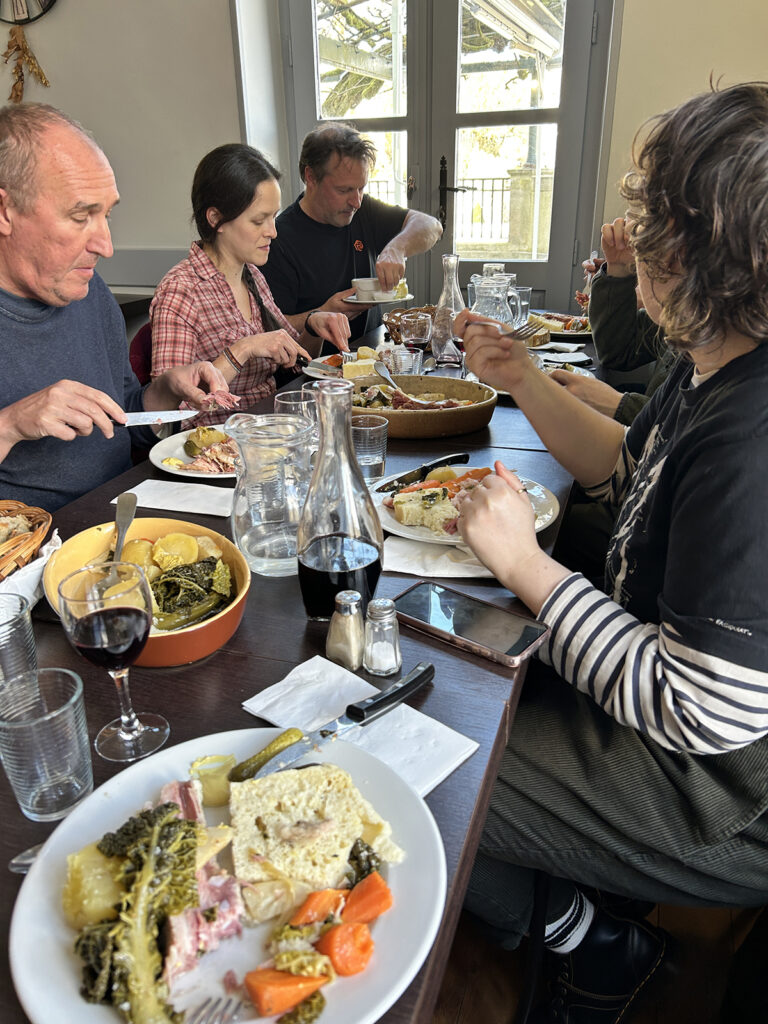
Shared encounters around a meal constituted, on a par with the times of debate devoted to the activities and to the analysis of the project itself, the moments where the encounter played out in depth. These times belong to two distinct but complementary registers: on one hand a strong informality — sharing food and drink, evenings, cooking together — on the other, moments of debate explicitly turned towards the relationships formed and their critical framing. Commensality plays a particular role here, one widely documented in sociology as a privileged space for the constitution of the social bond, beyond its merely nutritional function (see Georg Simmel, “The Sociology of the Meal”, 1910, and its reprise by Claude Fischler on commensality as a total social fact, L’Homnivore, 1990). These times multiplied over the course of the alternARTives project, revealing the capacity of the people present to take hold of a critical dimension of their own postures and to engage in genuine reflection — a capacity highly dependent on a trust built and “tested” between one another.
The question of time remains central here, and the project economy, by nature, reduces the available margins for it. For structures able to give themselves the means, there is nonetheless a lack of a finer understanding, and of a dedicated methodology, of the attention to be paid to the times that precede and follow the relationships themselves, and not only the times of the activity. The recommendation that emerges would be, beyond the sole issue of training, to establish times internal to the team specifically devoted to questioning projects from a relational and ethical angle, explicitly excluding, for those times, the stakes of quantitative success or aesthetic quality.
Identifying specific responsibilities within the team could also prove valuable, in particular to spot what constitutes spaces conducive to this questioning and to the welcoming of the greatest possible diversity of expression. Several questions then emerge: what characteristics must spaces of hospitality and encounter have to fulfil this function? What forms of involvement, beyond those already identified by the structure, would deserve to be taken into account? To what extent does the structure remain exposed to the real diversity of the forms through which people take part in cultural life — notably those it does not handle itself? How, for example, to take into account the fact that young people take part in cultural life as much through social-media posts as through theatre workshops? How to recognise that a food market may constitute, in itself, a dense cultural space — a place for sharing recipes, news, informal knowledge, sociability, discussion and the transmission of codes, including aesthetic ones (this attention to ordinary, non-instituted forms of culture connects directly with the “ways of operating” that Michel de Certeau identifies in everyday practices, already drawn on earlier in this report)? Can the cultural structure recognise spaces where it is even unnecessary to people’s cultural life, and position itself simply as a resource rather than an initiator?
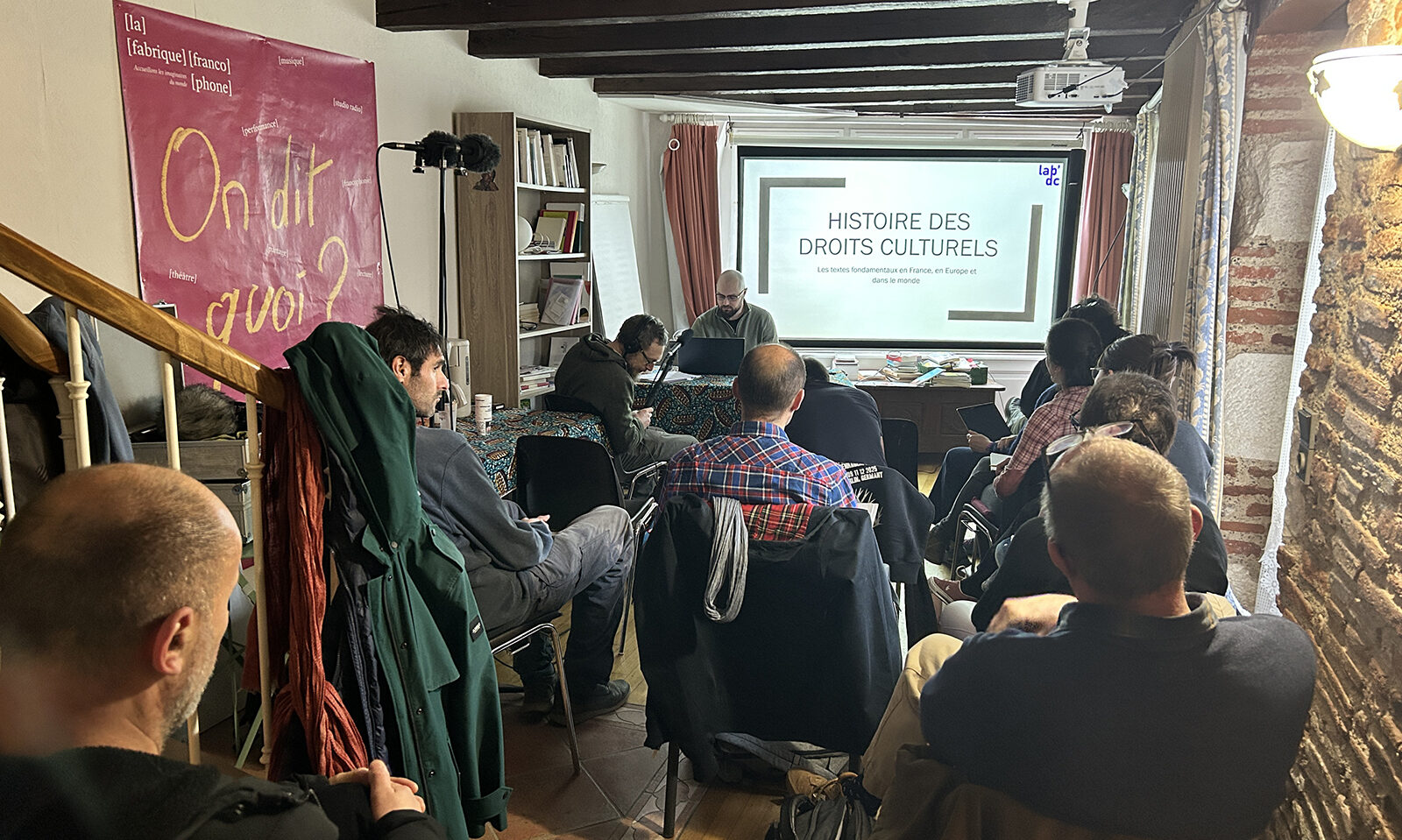
The activity carried out in Cahors around relational mapping illustrates, in negative, these same stakes. This tool, drawn from the LaboDC’s Interstices Protocol, proved relevant in substance, but its implementation was more limited with people meeting for the first time. This experience illustrates once again the importance of a presence settled over time, and the limits a tool — however relevant in theory — can meet when the minimal relational conditions for its implementation are not yet in place at the moment of its deployment. The exchanges that nonetheless resulted from it were precious, in particular thanks to Mrs Tayeb and her son (see below), and open essential prospects of reunion outside the project.
Relational relays – heritage figures
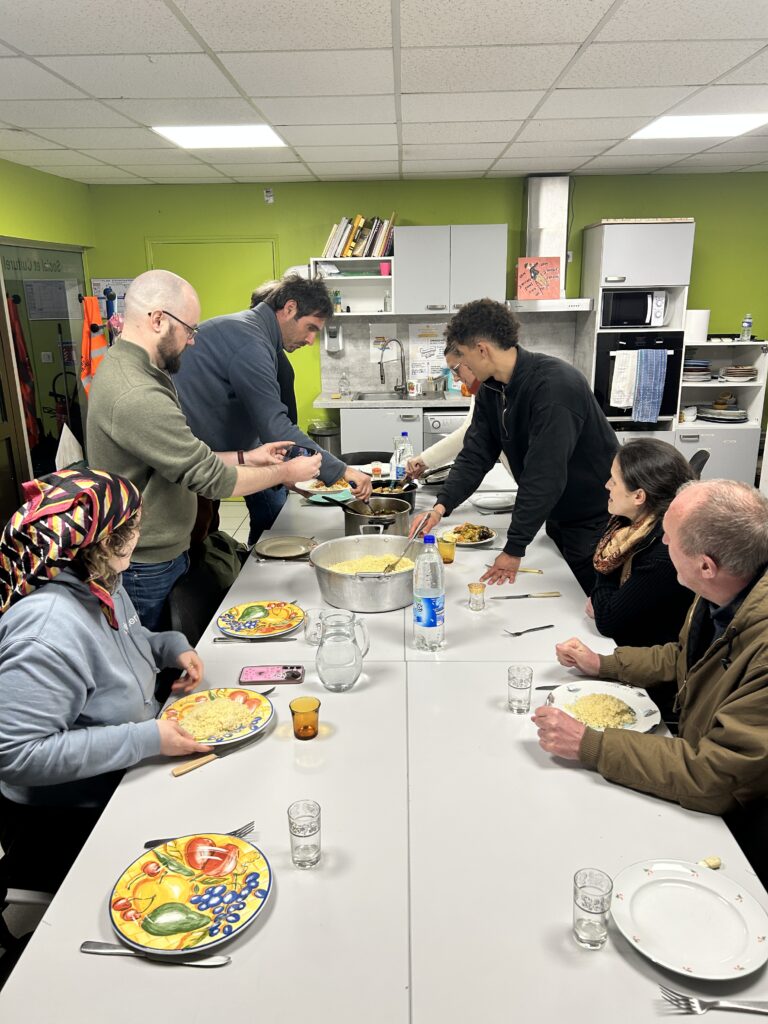
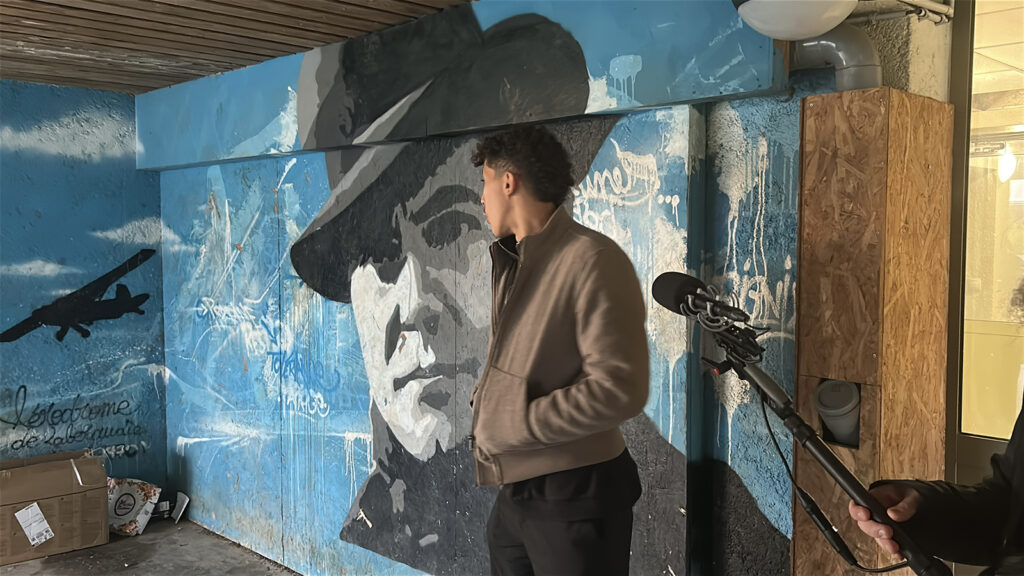
The couscous shared with Abdelaziz Tayeb’s association, his mother, and the professionals of the social centre: it was above all this moment that made possible the constitution of a narrative intended to nourish the Faro approach undertaken in the project’s second activity. These people played the role of “relational relays”, in continuity with a chain of encounters begun as early as the exploratory projects carried out in previous years with La Fabrique Francophone, and prolonged by the friendship formed between Abdelaziz, Cédric and Maël. One thus observes that the hospitality encountered extends to a relational circle where marks of esteem and complicity were already established beforehand. The same holds for the director of the cultural centre in Havelange, “Momo”, or for a woman met at Le Pivot: narratives of involvement are not born of particular arrangements that might have been set up by a different approach to mediation, programming or cultural action, but of human relationships — as formal as they are informal — established between specific people.
These observations teach that this type of contact remains possible, but that it escapes any logic of reification. While the object of the arrangement can be made available, or serve as a pretext or a catalyst for the encounter, the conditions of its meaning — unlike the conditions of its material existence — cannot be artificially produced: they belong to an organic temporality, proper to the relationship itself (this distinction connects with what Marcel Mauss identified in his analysis of the gift as the irreducible share of gratuitousness and personal commitment that escapes all contractual formalisation — The Gift, 1925; see also Jacques Derrida’s reflection on hospitality, which questions the tension between a hospitality conditioned by rules and an unconditional welcome that precedes it and gives it its meaning — Of Hospitality, 1997).
These people correspond to what can be designated as relational relays, and often turn out, in fact, to be heritage figures as well, in the sense established by the Faro Convention on the Value of Cultural Heritage for Society (Council of Europe) — either because they know the history and inhabitants of a neighbourhood particularly well, or because they constitute, for others, a point of reference: a model, a support, a hub of solidarity and recognition, or even a figure with a charismatic dimension. Whether or not they occupy a leadership position, whether visible or more discreet, these figures are regularly cited in conversations, without institutions always taking a measure of them equal to their real role. This observation notably connects with the analyses of asset-based community development (ABCD), which invite institutions precisely to better identify and recognise these community connectors, whose action often contributes, in practice, to missions that these same institutions set themselves as objectives. An avenue of work for the structures concerned would thus consist less in substituting themselves for these relays than in better identifying them, recognising them and, where appropriate, drawing on them in the conduct of their own missions.
The challenge of valuing the professional skills tied to cultural rights
On the professional level, three distinct skills are at play here, and yet often conflated: the capacity to recognise cultural expression where it stands, the capacity to form bonds with people, and the capacity to translate these informal spaces into the language and methodology proper to the professional and institutional framework. These skills do not necessarily overlap with the usual perimeter of responsibilities in the cultural sector: a mediator may prove barely competent in the capacity for recognition mentioned above, while a technical staff member may, conversely, possess real skills in forming connections.
In the absence of a sector-wide clearing effort on these skills and on their scope with respect to cultural rights — which is probably no bad thing in itself, given how much these skills would risk losing their meaning as soon as one sought to standardise them — the most practicable path consists in raising these questions as a team (or even beyond, where possible), and in building a working model proper to each structure and each collective concerned, with ways of recognising each person’s involvement that can free themselves from traditional job descriptions alone to find other forms of valuing. This invisibility relates, in its most objectifiable part, to what the sociology of work has documented under the name of “articulation work”: a set of relational and coordination tasks indispensable to the functioning of an organisation, but rarely inscribed in formal job descriptions or recognised as such (Anselm Strauss, “Work and the Division of Labor”, 1985; Susan Leigh Star and Anselm Strauss, “Layers of Silence, Arenas of Voice”, 1999). The financial question matters, of course, but the mere verbalisation of this recognition — explicitly affirming that the work accomplished by a person is indispensable to the life of the structure, and that it is not recognised at its true value in the sector model currently in force — already constitutes, in itself, a necessary and legitimate gesture.
Of course, the non-objectifiable part — the strongest remaining part of this equation — requires even greater vigilance, so deeply is it anchored in the sensitivity of the relationship and the unpredictability of encounters.
3. The human, civic and socio-economic impacts of recognition work, greatly underestimated
The paradox of measurement: impact and participation
Those who evaluate the missions of Cultural Centres and CECs, like those who draft the calls for projects in which La Fabrique Francophone takes part, are no doubt aware, at least in part, of the limits that impact measurement meets in describing the benefits that cultural policies bring to society. The progressive distancing of cultural stakes from their anchoring in relationship — their link to human rights, to otherness, to the humanisation of the other, to the sharing and debating of aesthetic references that always engage the way human communities envisage their common destiny — makes this link less immediately identifiable today than it could be in the aftermath of the Second World War in Europe.
A second reason, however, lies in the very nature of evaluation, whose scope is often underestimated by those who conduct it: like the sociologist who neglects their own observation bias, the measurement — or the attempt to describe — human relationship necessarily reduces its magnitude and its quality (a principle that can be related, by analogy, to what Donald Campbell formulated regarding social indicators: the more a quantitative indicator is used to guide a decision, the more it is subject to corruption and the more it distorts the processes it is supposed to monitor — Campbell, Assessing the Impact of Planned Social Change, 1976; an intuition popularised under the name of Goodhart’s law). Seeking to objectify friendship or recognition would, in a sense, run counter to them: these qualities cannot be calculated.
Yet it is these very qualities that trigger, in the first place, effective participation — the kind defined by its non-coercion, its active dimension, and people’s real capacity and real use of a contribution that is, from the outset and in fact, reciprocal, even if this reciprocity is not always so on the formal level. Thus, when the relationship is genuinely formed, a participant remains a participant and a facilitator remains a facilitator; but it is indeed the participant who, spontaneously, comes to offer a cake to the facilitator. This gesture does not belong to a logic of exchange or barter: it is a mechanism of recognition, through which each person contributes not only to the reciprocity of the relationship, but to the constitution of a “common space” — circumscribed, for the CEC, to the concrete limits of the building, but liable to extend beyond (see Marcel Mauss’s analysis of the gift already mentioned, and the work of the anti-utilitarian movement in the social sciences led by Alain Caillé, which makes this non-market reciprocity a condition of the human bond — Anthropologie du don, 2000).
The case of La Vénerie’s CEC: everyday realities little perceived from outside
These relational dimensions remain among the least visible from outside, and among the least understood by the professional artistic sector, which has historically built itself on a dissociation between this relational universe and its relationship to aesthetic and symbolic stakes, centred on the intrinsic qualification of the artistic gesture and of the work itself: its creation, envisaged from the point of view of a supply-side policy; its interpretation, belonging to art criticism; its reception, the object of the cultural mediation of works (widely documented by the sociology of art — see Nathalie Heinich, who analyses how the status of the artist was historically constructed through the assignment of a creative singularity irreducible to the relational conditions of its exercise — Être artiste, 1996).
The decree relating to CECs nonetheless explicitly mentions several dimensions largely compatible with the cultural-rights framework: individual and collective development, openness to the diversity of cultural codes, valuing of participants’ cultural references, development of sensitivity and imagination, civic expression, anchoring in societal stakes, and interaction with the surrounding milieu. It remains the case, however, that its evaluation criteria bear essentially on volumes of activity and on conformity of arrangement, far more than on any attempt to describe the relational dimension at play.
It is therefore not surprising that this relational work — which largely remains to be accomplished on the level of its recognition, and which is not taught as a pillar in its own right of the professions of culture — remains little identified in the gaze of evaluators, but also, very often, in that which professionals cast on their own practices. This difficulty of mutual recognition is found, on a more local scale, in the way the teams of Cultural Centres and CECs sometimes regard one another within a single structure; a subject that would deserve, as such, a dedicated space for internal dialogue.
The boiler room: testimonies and recognition
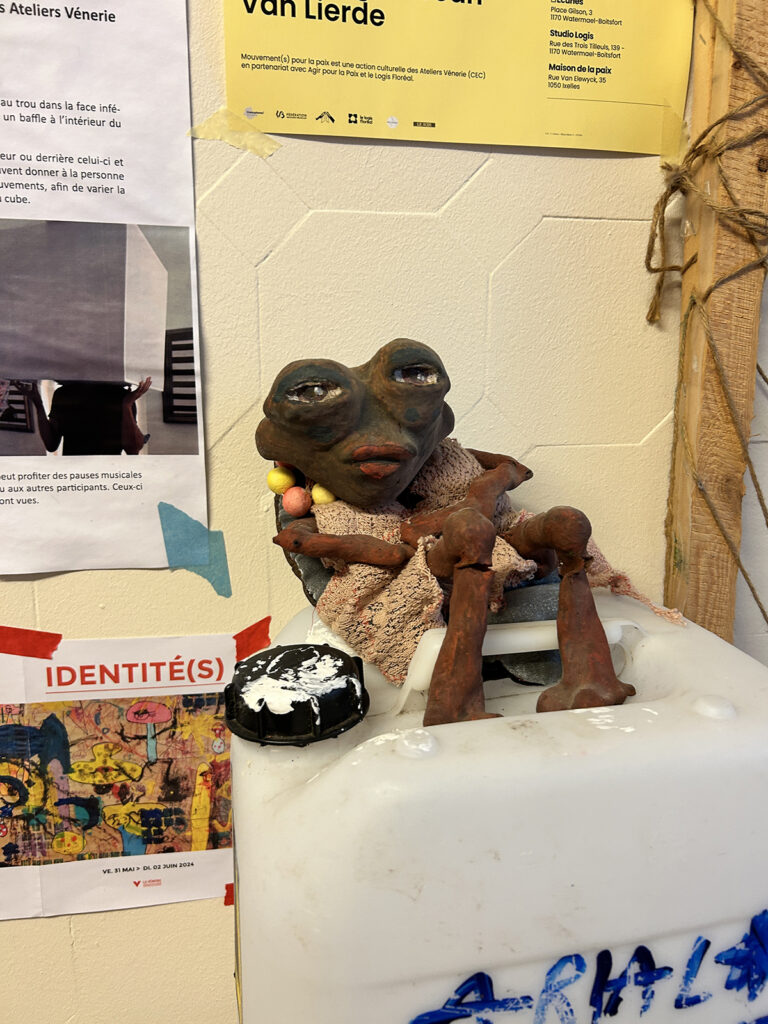
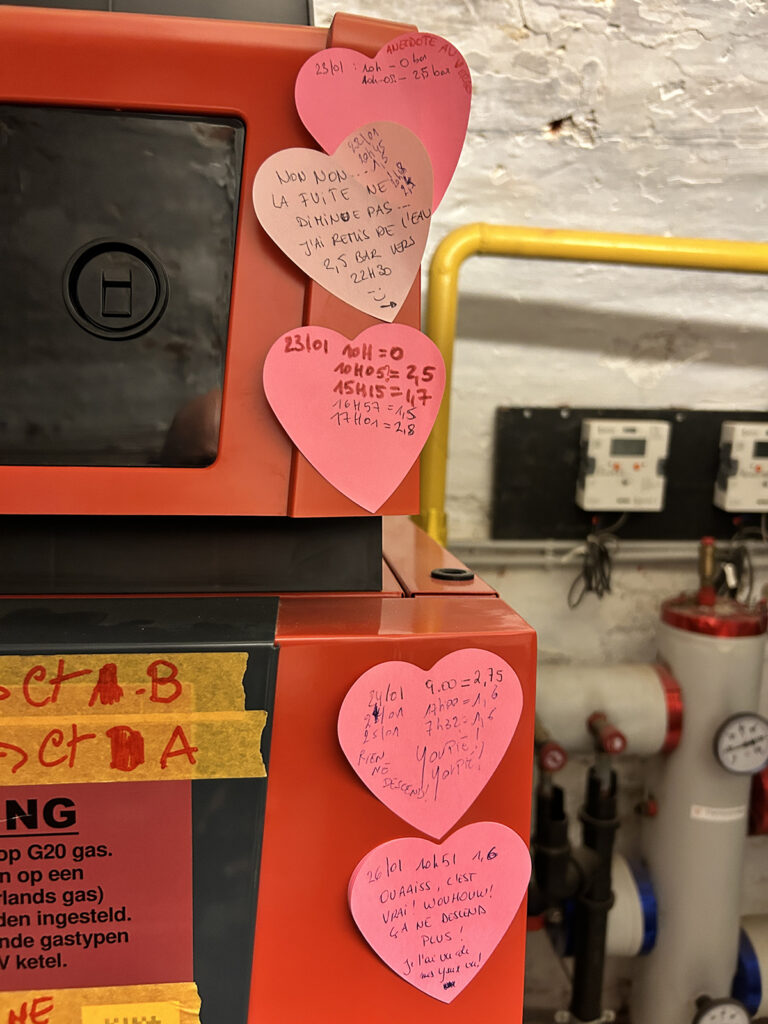
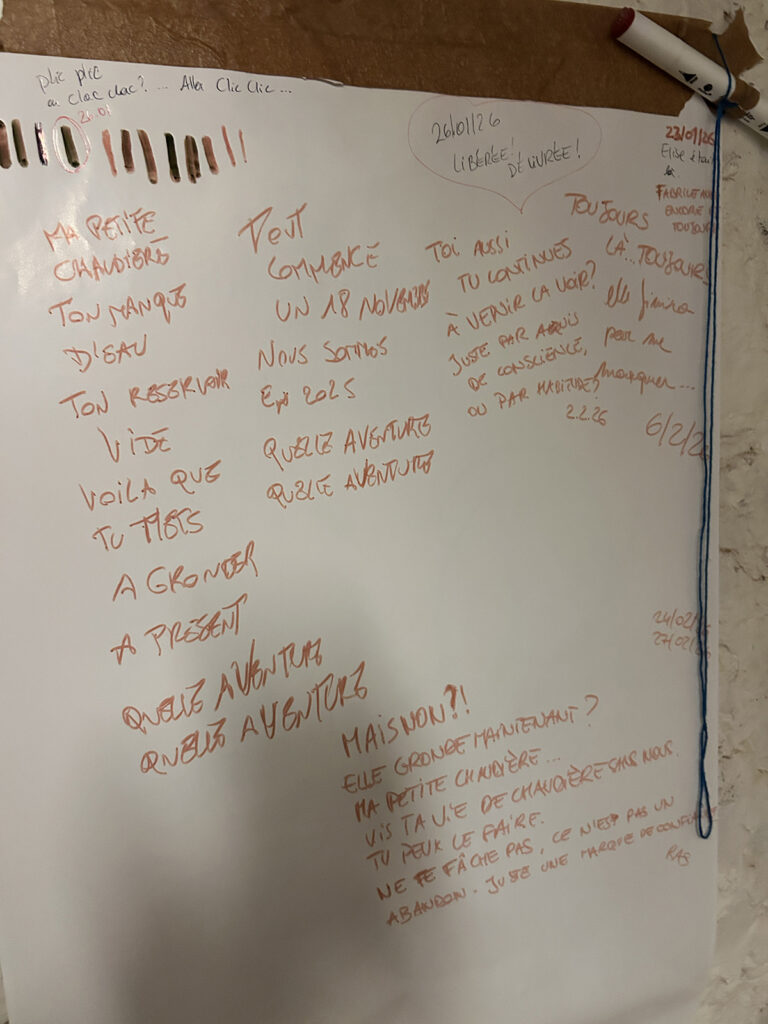
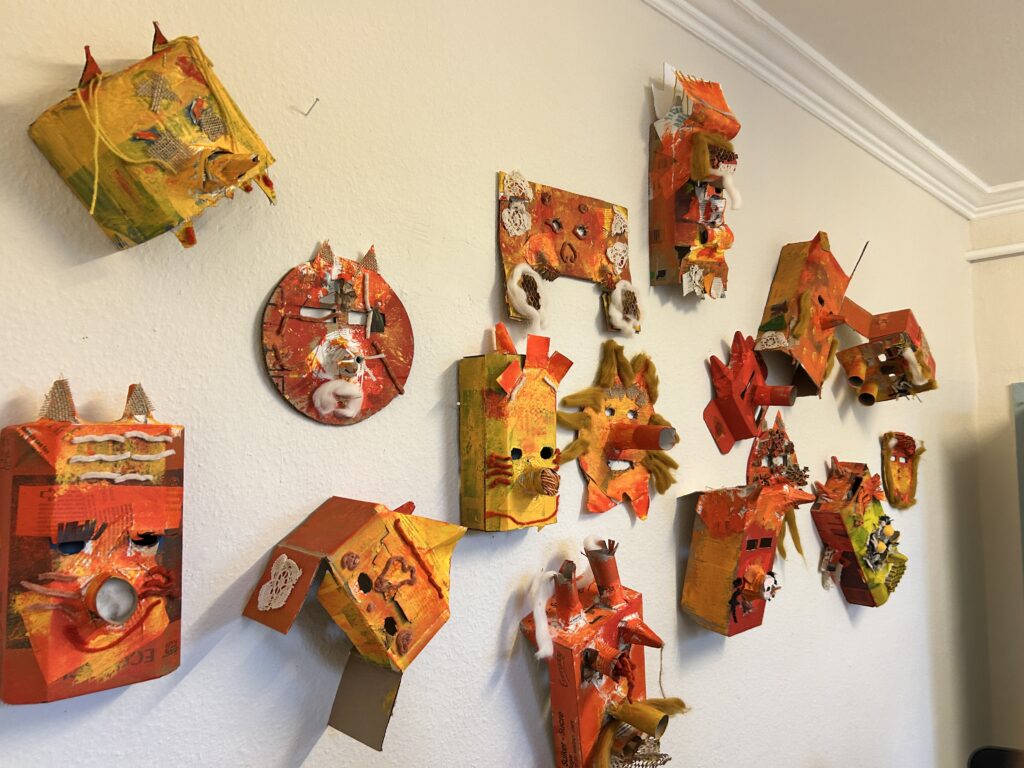
These relational dynamics, proper to the CEC, are not only given to be seen in the field of interpersonal relations: they also materialise, with a striking aesthetic density, in the physical space of the place itself. Behind the bar, the door leading to the basements opens onto a maze of corridors and rooms more or less used day to day, which house a store of several thousand, if not several tens of thousands, items of archives, objects and creations. This ensemble gives a tangible measure of the work accomplished by the CEC team over several decades.
The degree of recognition granted to symbolic, collective, informal and emotional expression is particularly advanced there — and extends well beyond the workshops to the internal life of the team itself: from children’s letters testifying to their passage to the humorous words left on the walls, near the boiler, whose upkeep remains difficult for want of sufficient budgetary allocation. This last observation is not trivial: the gap between the scale of the work accomplished by the CEC and its valuing in terms of public subsidies appears strikingly as soon as one visits the least visible parts of the building.
This observation makes it possible, however, to identify a factor that itself no doubt contributes to this gap, in the relationship between these actions and their visibility.
Archiving and existing: the stakes of valuing
For teams in the so-called socio-cultural field, time remains a limited resource, directed as a priority towards people rather than towards the trace of what has been done with them. While this priority is in itself a remarkable quality, it can also lead to underestimating the importance of the archive and of its valuing — all the more so at a time when the field of cultural policy itself produces little thought on this question. The gesture of archiving is today singularly connected, in the public and political sphere, to the fact of existing institutionally: the archive preserves the past, but also conditions the very possibility, for an institution or a collective subject, of outliving itself and transmitting itself in milieus where lived relationship is underestimated, even ignored.
Demonstration through material valuing (visual reports, photographs, albums, podcasts, videos, films, exhibitions) and its dissemination in formats appropriable by other professional fields — whether the art world sincerely interested in this material, the field of research, or that of heritage — thus becomes a stake in its own right. The question of the design of this valuing — the way it is shaped and made legible — grows in importance as the richness observed calls for specific treatment. One possible avenue: to make this valuing an activity in its own right rather than a by-product of the action, for example in the form of a narrative collection published annually, retracing the year’s projects, the lessons drawn from them by the team and by the people concerned, and including interviews with participants. Such an object, showable to political decision-makers as to evaluators, would also present the advantage of reducing the volume of material archives to be kept — without denying what this teeming accumulation may have of value in itself, the question of available space will necessarily arise in time, and such a compromise would make it possible to keep a trace of this work in a form transmissible to future generations. The format itself should be determined by the people at the origin of these stories and relationships, and correspond to their aspirations.
In the same spirit, the making of filmed interviews, or of any other arrangement making it possible to question the professionals, volunteers and inhabitants involved in the life and history of the place, would make it possible to fix these narratives and to disseminate them in the daily life of the structure — website, social media, display in common spaces. Such an approach would help install this history as a constitutive element of the place and of its mission, rather than as a secondary element of its activities and objectives (see Alessandro Portelli, on the intrinsic value of subjective, narrative testimony as a legitimate source of historical knowledge, including for institutions that are not heritage institutions in the classical sense — The Death of Luigi Trastulli and Other Stories, 1991).
4. Alert! On fragility and sacrifice
Environments conducive to vulnerability
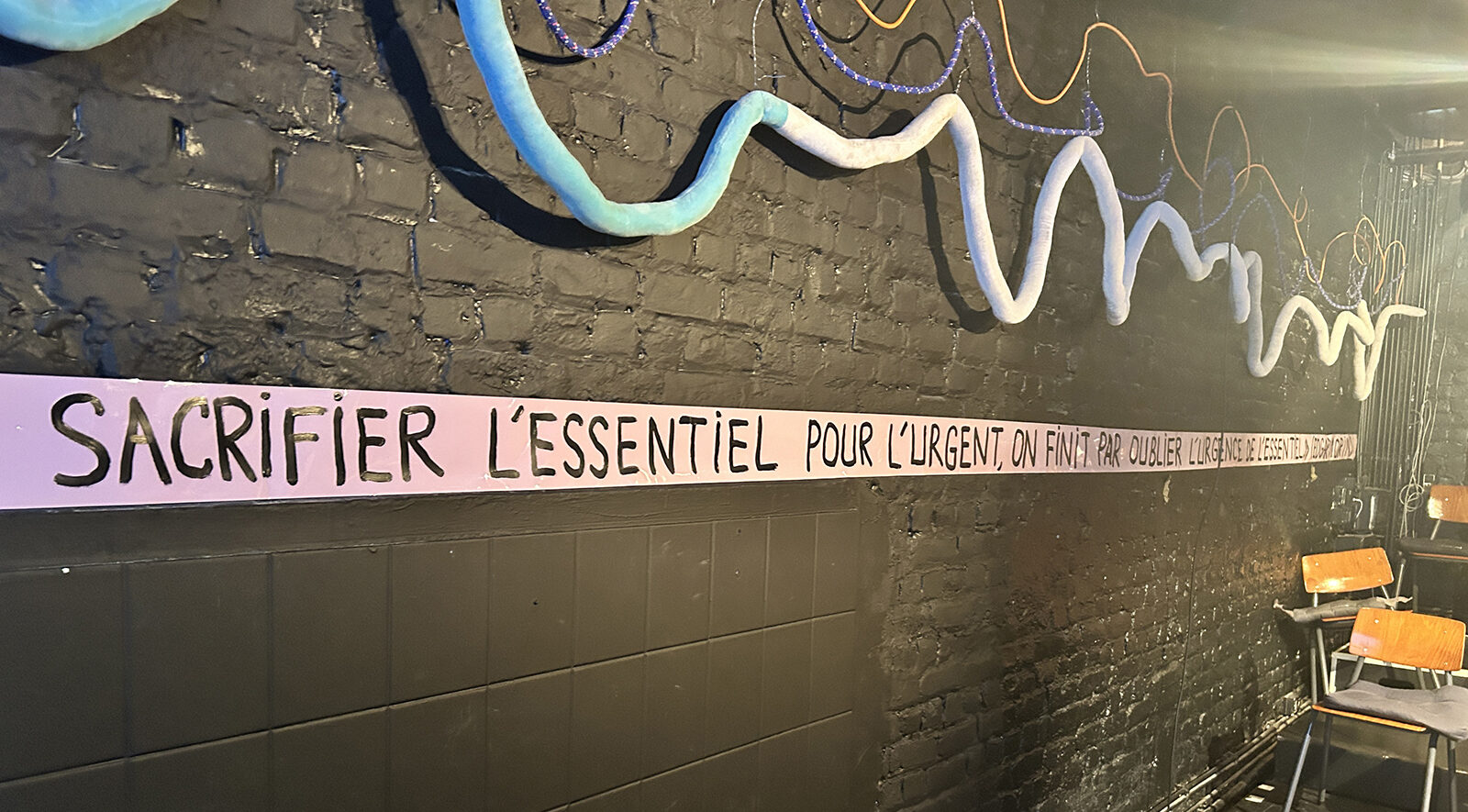
The difficulties experienced by some long-committed professionals within these structures show that these relational qualities — the capacity to form connections, the durable and individualised support of people — are not free: they presuppose an expended energy, and this energy has a cost. Yet these structures, for the reasons mentioned above, remain largely underestimated in their impact and little present on the scale of political communication priorities, which translates, in practice, into chronic underfunding. The lack of means induces a lack of staff, a lack of time, a lack of equipment. In order to preserve the relational quality that constitutes, in the eyes of the teams themselves, not only the structure’s primary objective but its raison d’être — both socially and in the lived experience of professionals as of inhabitants and participants — the resulting tension translates into a set of sacrifices: hours worked without pay, sometimes considerable, up to the necessity of carrying, in places where this should not be necessary, an advocacy for what is accomplished at the CEC to be recognised at its true measure.
Certain examples illustrate this quite clearly: the attention paid by the technical teams of cultural structures to preparing the stages differs appreciably depending on whether it concerns professional artists or CEC workshop participants come to present their work. Where a CEC professional could legitimately find, within these spaces, support and recognition of these cultural expressions, they instead meet a lack of consideration and the expression of a devaluation of this work by the yardstick of artistic excellence alone (sometimes, indeed, a real prejudice).
The experience of “Momo”, former director of the Havelange cultural centre, is also striking in this regard. Having gone through several episodes of severe professional exhaustion, she kept her passion and the simplicity of her approach to people; but the institution seems to remain largely unaware of the weight of her commitment and the sacrifices it entailed. What to say, for instance, of the fact that artist residencies were often made possible only because she housed the beneficiaries herself, or spent hours preparing meals — knowing, from experience, that the quality of the relationship also passes through these gestures, systematically absent from the gaze that traditional project management casts on this work? How, indeed, could one inscribe in the job description of a cultural venue’s directorship the skill of “baking pastries to make invited artists want to come back”? This lack of formalisation no doubt partly explains why this type of commitment remains so little named in the very places that nonetheless benefit from it directly.
An alert, moreover: as the generation of professionals particularly committed to the creation and upkeep of these places reaches retirement age, the question of the continuity of this support arises — not to mention the fact that this commitment remains far too little valued by the public authorities in relation to what it collectively produces.
Recognising vocations and values rather than results
This observation ties in with a more general bias of the evaluation of public-service missions, which identifies results rather than the vocations and values that ground the commitment from which those results flow. This is what feeds the paradox mentioned above: seeking to objectify impact measurement amounts to instrumentalising what, by nature, makes possible emancipation, empowerment and the encounter with society — namely the very unconditionality of the relationship and of the initial proposition that grounds it.
Two work-fronts. The first concerns the capacity of those who know this reality from within to develop its narrative for the political world and the art world, without having to apologise for existing, and by learning to value what they accomplish. One can mention an avenue noted above, of a strengthened link between generations: the youngest, in particular, often possess precious skills in storytelling, content creation and digital use, which remain to be put at the service of these spaces. The exercise is not simple, these young professionals not necessarily being present in the same places or the same networks — but it constitutes a genuine field of work for these structures. The second work-front concerns the training of political decision-makers and civil servants themselves in cultural rights and in other frameworks of evaluation, in order to move an essentially technical vision of the public-service mission towards a reappropriation of the notion of the common good, and of the tensions it maintains with impact measurement alone. This work-front largely remains to be carried out; it matters, first of all, simply to name it as such.
5. France–Belgium: plural approaches to the framework
The alternARTives project brought into relation two structures whose legal frameworks do not accord the same place to cultural rights. This observation sheds light on part of the observations reported above, and notably on the fact that the practices closest to the framework are found, at La Vénerie, in the entity that does not formally fall under it. It therefore seems useful to retrace the two trajectories by which cultural rights entered French law and the law of the French Community of Belgium, before examining what these trajectories produce, and what they do not.
Two distinct genealogies
In France, the inscription of cultural rights in law proceeds from a trajectory largely external to the Ministry of Culture. The framework spread there from the Fribourg Declaration (2007), drawn up by the Fribourg Group around Patrice Meyer-Bisch, then relayed by voluntary-sector and territorial actors, activists and former officials of the Ministry of Culture. The inscription itself came about by way of an amendment in the Senate, in the law on the new territorial organisation of the Republic: “responsibility in cultural matters is exercised jointly by the territorial authorities and the State in respect of the cultural rights set out by the Convention on the Protection and Promotion of the Diversity of Cultural Expressions of 20 October 2005” (art. 103 of law no. 2015-991 of 7 August 2015 — legifrance.gouv.fr/loda/article_lc/LEGIARTI000030998225). The subject was championed in the Senate notably by Marie-Christine Blandin and Sylvie Robert.
The legislative vehicle is itself significant: it is a law of territorial reorganisation, which abolishes the general competence clause of the Départements and Regions. The primary function of article 103 is therefore to secure a shared cultural responsibility at the moment when competences are closing off; the ethical ambition of the framework comes second. The law on the freedom of creation, architecture and heritage confirms the mention the following year, this time within a public-service policy in favour of artistic creation, alongside freedom of dissemination and freedom of programming (art. 3 of law no. 2016-925 of 7 July 2016).
Neither of these texts refers to the Fribourg Declaration, to the International Covenant on Economic, Social and Cultural Rights, or to General Comment No. 21, but to the 2005 UNESCO Convention — an inter-State instrument devoted to the diversity of cultural expressions, which states no individual rights and institutes no rights-holder. The drafting compromise thus defuses the framework at the very moment it installs it, something the literature sometimes notes convergently under the angle of “semantic drift” and of a legal scope held to be weak (M.-O. Padis, “À la recherche des droits culturels”, Terra Nova, 11 March 2024) — and for good reason, with no reference to the international instruments that carried the essential political consequences.
The Belgian French-speaking trajectory is the reverse, the foundation being first of all constitutional. Article 23 of the Constitution provides that “everyone has the right to lead a life in keeping with human dignity” and ranks, among the economic, social and cultural rights that the law, decree or ordinance must guarantee, “the right to cultural and social fulfilment” (Belgian Constitution, art. 23, para. 3, 5). The sectoral legacy is that of éducation permanente and of a succession of decrees on cultural centres — 1970, 1992, then 21 November 2013 — the last of these arising from a long effort carried out with the sector, under the tenure of Fadila Laanan, and for which Luc Carton is regularly presented as one of the intellectual inspirations.
The 2013 decree proceeds not by reference but by internal definitions. Its article 1, 9° defines “the right to culture” as “within Human Rights, the whole set of cultural rights, in terms both of entitlements and of freedoms, individual and collective, comprising notably” six elements: artistic freedom, understood as the freedom to express oneself creatively, to disseminate one’s creations and to promote them; the right to the maintenance, development and promotion of heritages and cultures; access to culture and to information in cultural matters, understood as access that is notably economic, physical, geographical, temporal, symbolic or intellectual; participation in culture, understood as active participation in cultural life and cultural practices; freedom to choose one’s cultural belongings and references; and the right to take part in the elaboration and implementation of policies and programmes, and in specific decision-making in cultural matters (decree of 21 November 2013). The adverb “notably” deserves to be noted: the enumeration is open, and cultural rights are therefore designated there by illustration rather than by definition.
The same article 1 defines culture, cultural democracy, cultural democratisation, cultural development, éducation permanente, the cultural function and cultural mediation — that is, the entire lexicon devoted to theories of cultural policy. Cultural democracy is there “the active participation of populations in culture, through collective practices of expression, research and cultural creation carried out by freely associated individuals, in a perspective of equality, emancipation and social and political transformation” (art. 1, 6°), whereas cultural democratisation is limited to “the broadening and diversification of audiences, the development of equality in access to works and the facilitation of that access” (art. 1, 7°). Article 2 sets the general mission — “to contribute to the exercise of the populations’ right to culture, in a perspective of equality and emancipation” — and specifies, in its paragraph 3, that the action of cultural centres “contributes to the exercise of the right to culture and, more broadly, to the exercise of the whole set of cultural rights by all and for all, in respect of the whole set of human rights”. Article 20 draws the operational consequence: cultural action “aims to enable populations to effectively exercise the right to culture, with particular attention to reducing inequalities in the exercise of this right”. Once again, one can observe the effort not to decide between approaches to the cultural stake that are nonetheless not cumulative, in the sense that “the right to culture” is, in its explicit terms, the translation of an implicit choice in the sense of cultural rights (which culture are we talking about? In the singular, and with no reference to the meaning of “the culture of humanity”, this singularity is, in the policies pursued as in the facts of the sector concerned, a systematic pointing to a certain readily identifiable culture — thus a favouring of “one” culture, at the expense of “the” cultures).
A reading of the decree shows that it consequently cites no international human-rights instrument in support of these definitions. Its only mention of a human-rights instrument appears in article 8, and concerns not the definition of cultural rights but a condition of membership: a person may not be a member of a cultural centre if it is judicially established that they “do not respect the principles of democracy as set out by the European Convention for the Protection of Human Rights and Fundamental Freedoms” and by the laws of 30 July 1981 and 23 March 1995. The decree therefore attaches itself to human rights through a single formula — “within Human Rights” — and through the unsignalled borrowing of the definition of culture given by the Fribourg Declaration, whose article 1, 5° takes up the terms almost word for word (compare with article 2 a) of the Fribourg Declaration, 2007). The explicit doctrinal attachment — article 27 of the Universal Declaration, article 15 of the Covenant, General Comment No. 21 — belongs to the sectoral literature and not to the normative text (C. Romainville, “Le droit de participer à la vie culturelle”).
It should finally be noted that this arrangement is isolated in the decree landscape. A reading of the main cultural texts of the French Community shows that neither the decree of 17 July 2003 on éducation permanente, nor the decree of 30 April 2009 on centres for expression and creativity, nor the museum decrees of 17 July 2002 and 25 April 2019, nor the decree of 13 October 2022 on the cultural and artistic education pathway employs the expression “cultural rights” — nor, for that matter, that of “right to culture”. The 2003 decree approaches it by another route, assigning to éducation permanente “the exercise of social, cultural, environmental and economic rights in a perspective of individual and collective emancipation of audiences” and inscribing cultural democracy in its purpose (art. 1). The 2009 CEC decree, for its part, mobilises neither register: it grounds its missions on creativity, the transmission of artistic languages, openness to the diversity of cultural codes, the valuing of participants’ cultural references and the development of civic expression, in “a perspective of social and cultural emancipation” (art. 1 and art. 5, § 1).
A second legislative entry point exists, however, and it proceeds from a reverse logic. The decree of 20 July 2022 amending the framework-decree of 10 April 2003 on the recognition and funding of the professional performing-arts sector introduces into the definitions a 30° worded as follows: “cultural freedoms and rights: the cultural freedoms and rights enshrined by the Fribourg Declaration on cultural rights”. This is, to our knowledge, the only explicit legislative reference to the Fribourg Declaration in the French Community. The comparison of the two texts is instructive. Where the 2013 decree itself defines the content of the right and makes it the object of the mission, the 2022 decree refers to an external source and makes cultural rights a criterion for assessing applications: operators describe “the actions put in place to foster the exercise of their cultural freedoms and rights by audiences”, and the commissions evaluate “the impact of the project on the exercise by audiences of their cultural freedoms and rights” — this within a text whose general objectives remain the support of creation, artistic freedom, artistic excellence and the encounter between artists, works and audiences “in a perspective of cultural democratisation” (new art. 1/1). Beyond, this time, the contradiction of assigning the label “audiences” in contradiction with the human-rights imperative of the non-reification of “persons”, it is indeed here that one finds the identification of cultural rights as the exercise of a fundamental freedom and not as a professional mission, even if the framework still deems it compatible.
What the texts say: rights-holders, contents, mechanisms
The table below summarises the gap between the two normative arrangements.
| France | French Community of Belgium | |
| Governing text | Art. 103 of law no. 2015-991 of 7 Aug. 2015 (NOTRe); art. 3 of law no. 2016-925 of 7 July 2016 (LCAP) | Decree of 21 November 2013 on cultural centres |
| Nature of the vehicle | Territorial reorganisation law, then artistic-creation law | Sectoral decree of recognition and funding |
| International reference mobilised | 2005 UNESCO Convention on the diversity of cultural expressions, cited in the text of the law | No citation in the 2013 decree, which defines the notions itself; unsignalled borrowing from the Fribourg Declaration for the definition of culture. Explicit reference to Fribourg in the performing-arts decree of 20 July 2022 |
| Rights-holder | Not designated; the text addresses the State and local authorities | The populations of the territory; the person |
| Content enumerated | None | Open enumeration (“comprising notably”) of six rights in art. 1, 9°, under the heading “right to culture”: artistic freedom, heritages, access, participation, free choice of belongings and references, participation in decisions |
| Attached mechanisms | None | Shared territorial analysis, steering council, five-year programme-contract, typology of cultural actions |
| Link to funding | None | Conditions recognition and funding |
| Evaluation foreseen | No dedicated evaluation | Statutory evaluation; adjustment passed in 2024, in-depth evaluation announced for 2027 |
The most consequential difference is that of the rights-holder. The French text names no one: it institutes an obligation of respect borne by public bodies, without designating who may invoke it, without enumerating any content, without procedure and without avenue of recourse. The Belgian decree names the populations concerned, details the attributes of the right, and above all attaches to these attributes procedures whose existence conditions recognition and funding: the shared territorial analysis, which engages citizens, partners and public authorities in identifying the stakes; the steering council, charged with permanent self-evaluation and territorial anchoring; the five-year programme-contract. The inclusion, among the six rights, of the right to take part in cultural decision-making constitutes in this respect a singularity: it is a procedural right, rarely inscribed as such in a sectoral text.
What the gap reveals about the two approaches
On the French side, the wording adopted reflects the persistence of a conception of culture as an offer of excellence guaranteed by the State, and a long-standing mistrust of anything that might be read as a particularism. The framework becomes acceptable there only on condition of being neutralised — in the absence of a subject of the right, of a precise definition, and of any clarification of the responsibilities that recognising these rights creates for the public-service missions of culture. One might say that they enter through the territorial door because the artistic door is closed to them. The objections voiced in public debate confirm this in mirror image: risk of relativism, fear of an identity-based segmentation of audiences, defence of universalism (Padis, Terra Nova, 2024).
On the Belgian French-speaking side, the field had long been structured by éducation permanente and by an associative fabric where culture is already thought of as a collective process and cultural action as political work. The 2013 decree therefore did not have to conquer hostile terrain: it codified an already-existing militant reality. The risk consequently shifts, no longer through avoidance, but through proceduralisation — that is, the transformation of a relational ethics into obligations of arrangement. The vocabulary follows this divide: France says “cultural rights” against a backdrop that has remained one of democratisation, Belgium says “cultural democracy” and “right to participate in cultural life” without changing the posture of the public authorities in matters of evaluation and recognition.
The aftermath: what ten years of application have produced
In France, the normative effect has remained nil and the lexical effect considerable. No implementing decree, no indicator, no litigation has been raised on this specific issue. As early as 2019, the Senate noted a slow appropriation, insufficient territorial coordination and a “nuanced” assessment of the territorial conferences of public action in cultural matters (Information Report no. 210, Les nouveaux territoires de la culture, A. Karam and S. de La Provôté, 18 December 2019). The evaluation report on the LCAP law, eight years on, notes that the law “undergoes, in the test of its implementation, vicissitudes” and formulates twenty-eight recommendations (Report no. 117, E. Joseph, M. de Marco, S. Robert, November 2024). The Ministry, for its part, integrated the framework in the register of continuity rather than rupture, as attested by the title of the symposium it devoted to the question: “From sharing masterpieces to guaranteeing cultural rights” (History Committee of the Ministry of Culture, December 2019). Recent debate sums up the state of play: where Terra Nova’s analysis concludes to a use reduced to territorial diagnosis and to the extension of existing access policies, Jean-Michel Lucas replies that the non-application stems from the refusal to recognise the framework and from persistent ignorance of General Comment No. 21, of the Shaheed report on artistic freedom, and of the Faro Convention (J.-M. Lucas, “Où rechercher les droits culturels des personnes ?”, La Grande Conversation, 24 April 2025).
In French-speaking Belgium, the effects are measurable, precisely because the decree created mechanisms — and the available measurements are instructive. The study commissioned by the administration on the implementation of the decree by cultural centres covers one hundred and nineteen structures: eighty-three per cent of them significantly mobilise the terminology of cultural rights, but the typology of adherence reveals a more nuanced reality: nine per cent of strong adherence, seventy-four per cent of a reflexive or conditional position, seventeen per cent of non-adherence. Two competing interpretations of the framework coexist, one legal and centred on attributes and participatory governance, the other philosophical and centred on inequalities. The participation observed relates massively to information and consultation, with delegation remaining rare; people not already engaged remain difficult to reach; the technical vocabulary excludes; the administrative burden weighs; and professional identities are placed under tension (É. Vandeninden, under the direction of R. Brahy and C. Pirenne, La mise en œuvre du décret du 21 novembre 2013 par les Centres culturels, 2020 report, published in 2022).
The evaluation of the decree on centres for expression and creativity is more frontal still. Commissioned in 2020 by Minister Bénédicte Linard and entrusted to a university team, it notes a sector-wide consensus on one point: “the CEC decree proposes demanding conceptual rules for ultimately a subsidy that is not equal to these demands”, to which are added the imprecision of the notions mobilised and a tension never arbitrated between the artistic requirement and the civic requirement (Observatoire des politiques culturelles / UCLouvain, Évaluation du décret du 30 avril 2009, final report 2022). As for the revision of the decree on cultural centres, passed on 20 March 2024, it was conducted under an explicit instruction of no financial impact and is limited to technical adjustments — processing times reduced from eighteen to twelve months, composition of management committees and steering councils, a platform for dialogue with municipalities — with the in-depth evaluation deferred to 2027, while local authorities signal their growing difficulty in holding to the funding parity (Union of Cities and Municipalities of Wallonia — MonASBL, March 2024).
A revealing discrepancy: the CEC outside the framework
One observation gives a legal explanation for part of what has been described above. The cultural-rights framework applies, at La Vénerie, to the Cultural Centre and not to the Centre for Expression and Creativity: the decree of 30 April 2009 on the framing and funding of centres for expression and creativity does not employ the expression, and grounds the missions on other notions — creativity, transmission of artistic languages, openness to the diversity of cultural codes, civic expression, emancipation, mixing of populations (art. 1 and art. 5, § 1 of the decree of 30 April 2009). In other words, the structure that has the framework is not the one where the observed practices come closest to it, and the one where these practices unfold has neither the statutory vocabulary, nor the mechanisms, nor the budgetary legitimacy that attach to it.
This discrepancy sheds light on several observations of the present report: the gap between the scale of the work accomplished at the CEC and its valuing in subsidies; the difficulty teams have in getting what plays out in the interstitial spaces recognised as belonging to a public-service mission; and the fact that the applicable evaluation criteria bear on volumes of activity and conformity of arrangement rather than on relational quality. It invites us not to conclude too quickly that normative inscription determines the quality of practices: it determines above all their recognition, which is not the same thing.
Lessons for alternARTives
The comparison reveals two symmetrical failures, each of which informs on the limits of the other. France produced a framework without a mechanism: available, non-binding, and therefore largely reappropriable by actors — which is what allowed its militant and methodological use — but reversible, easily decorative, and exposed to the relabelling of pre-existing mediation arrangements. French-speaking Belgium produced a mechanism without a revision of means or criteria: participatory procedures became mandatory, but the sector’s economy and the instruments of assessment did not follow. In both cases, what did not move is the same: the instrument of measurement. This is very precisely the paradox described above, that of an evaluation which, in seeking to objectify the relationship, reduces its scope.
From this follows an orientation for advocacy — including at European level — that this project makes it possible to formulate: the priority stake is probably not a new normative inscription (French-speaking Belgium shows that a demanding decree can coexist with chronic underfunding and an unchanged evaluation), but rather the joint transformation of the criteria of evaluation and of the economy of structures. The question is not whether cultural rights appear in a text, but whether what makes them effective — the time of the relationship, hospitality, articulation work, the recognition of relational relays — is recognised as constitutive of the mission and funded as such.
This report was written by Maël Lucas, coordinator and co-founder of the Laboratoire des Droits Culturels, production officer at La Fabrique Francophone. It is distributed under a Creative Commons CC BY-NC-SA 4.0 licence. It was made possible by the funding of the European Commission within the Erasmus+ KA210 project “alternARTives”, co-led by La Fabrique Francophone and the cultural centre and centre for expression and creativity La Vénerie, which took place in 2025–2026.
6. Annex — analysis grid of the Laboratoire des Droits Culturels
ANALYSIS GRID OF THE LABORATOIRE DES DROITS CULTURELS
Do all the people present in the project or the structure (management, teams of professionals or volunteers, participants or beneficiaries of an action, neighbours…) have the same opportunities to initiate the relationship?
How are they named and characterised in the first exchanges at the root of the structure or the project? Are they reified (could they be replaced by another group of people without changing the content of the project)?
Do these designations evolve during or after the encounter?
Do spaces for prevention, discussion and recourse exist for foreseeable questions linked to known relational, professional, organisational or ethical issues?
Do spaces and times for prevention, discussion or recourse exist for issues still unknown?
In what way do the structure or the project contribute to reducing gaps in dignity, in capacity to act, or in capacity for expression among people?
At the end of the project, will the people initially called upon otherwise than as co-leads be effectively able, in turn, to call upon the leads — this time in a position of beneficiaries?
Can the actions and relationships carried out, in practice, be valued even when they constitute, from a certain point of view, a failure or reveal limitations, or must they necessarily be “successes” to ensure the survival of the structure or its external image?
Are there professional or relational “silos” between the people within the structure or project concerned? If so, is the reason for this discussed by these people, and what spaces/times are devoted to it?
Have the criteria for evaluating the actions carried out, individual and collective work, and the results of the structure or project been discussed with all the people concerned, with a real possibility of contribution by each?
Are the mechanics of remuneration, of the allocation of responsibilities, and the coherence between the responsibilities assumed and the arbitration privileges discussed, understood and approved by all the people making up the team/collective concerned?
Are the richness and plurality of the modes of expression, of passion and of meaning sought by people in their work actively sought as potential resources for collective action? When they are an integral part of the projects carried out, are they valued and recognised at the level of their contribution to the life of the structure, or are they rather made invisible?
In practice, do the objectives linked to the production of specific deliverables constitute a support or a constraint for the free, durable and informed deepening of relationships between people? Can these objectives be set aside when a relational imperative requires it?
Is the relationship between the structure’s overall objectives and the notions of emancipation, of free development of the personality, of freedom of expression, of reducing gaps in dignity, formulated in writing?
Can the structure identify one or more past situations where this relationship was deficient (with or without resolution)? If no situation is identified, is this absence due to a lack of internal transparency or to a particular fear of raising it?
Are the people, communities and cultural narratives made less visible by any programming, action or research arbitration identified within the project or the structure? Can those responsible for these arbitrations justify their choices in relation to the corpus of fundamental human rights?
Is the life or survival of the structure or project, in practice, dependent on the over-investment of one or more people relative to the responsibilities foreseen or negotiated when they took up their post? If so, is this situation known to the colleagues or partners present?
What avenues are being explored to ensure that this situation cannot become permanent?